
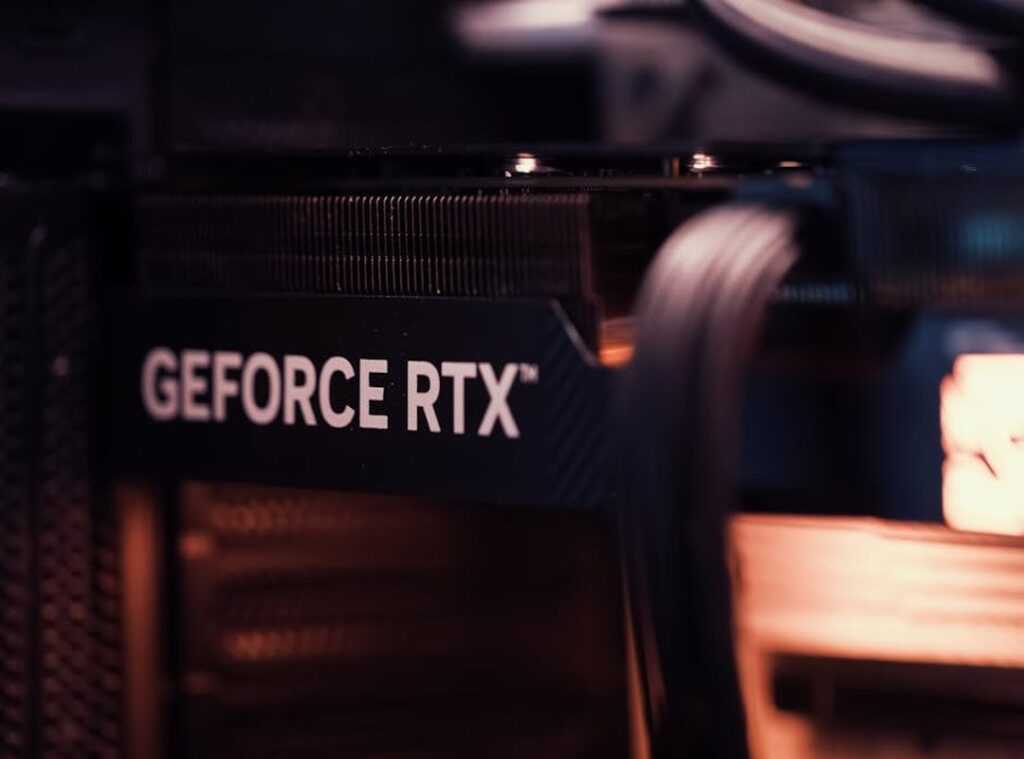
Ever watched a movie or played a game and thought, “Wow, those graphics are insane”? Yeah, me too. It’s mind-blowing, right?
But then you hear terms like ‘teraflops’ and ‘ray tracing’, and honestly, it’s like a different language. What does any of it really mean? The world of next-gen graphics cards is full of hype, but what’s actually important?
I’ve spent years diving into the nitty-gritty of tech trends, watching hardware evolve. It’s a passion of mine. I know the feeling of getting caught in the marketing spin.
But here’s the deal: I’m going to break it all down, jargon-free. By the end, you’ll get what’s behind those stunning visuals but also sidestep the buzzwords. You’ll see what’s truly behind these advanced graphics processing units.
The Big Shift: From Brute Force to Smart Graphics
Once upon a time in the world of graphics, the method was simple: use brute force. Just throw more raw power at problems. Need better performance?
Add more cores, crank up clock speeds, and hope for the best. It’s like building a house by hiring an army of workers who all hammer nails. Sure, you get the job done, but it’s not really fast, is it?
Now, we’ve gotten smarter. Instead of adding more workers, we bring in specialists. Think plumbers and electricians (specialized cores).
They do their specific jobs with incredible efficiency. This is what next-gen graphics cards are all about. It’s not just about more power. It’s about smart power.
Advanced graphics today mean combining raw power with dedicated hardware for specific tasks. We’re talking about specialized units for lighting or AI tasks. Remember those big scenes in blockbuster movies?
Yeah, those are handled by smart algorithms that know how to use specialized cores. It’s not as flashy as adding more cores, but it works.
Parallel processing also plays a key role. Imagine a GPU handling thousands of simple tasks at once, like coloring each pixel on a screen. It’s like having an army of ants building a sandcastle grain by grain.
Fast and precise.
If you’re exploring the best gaming monitors features that matter most, you’ll appreciate how these advancements in graphics processing make a difference. So, next time someone tells you they’re all about power, ask them if they’re using it wisely. the real magic happens.
The Tech Trio Powering Next-Gen Visuals
to the magic behind jaw-dropping graphics. Real-time ray tracing is the first piece of this tech puzzle. It simulates how light behaves in the real world, bouncing around surfaces.
Remember those old video games with flat shadows and fake reflections? Ray tracing blows that away. It’s like seeing everything through your own eyes.
You get hyper-realistic puddles and soft shadows that move with you. This tech turns virtual worlds into something you could swear you can touch.
Next up, AI upscaling. It’s a game-changer, trust me. Imagine your graphics card rendering a game at 1080p, then using AI to make it look like 4K.
It’s like a master art restorer perfecting a painting in seconds. You get higher frame rates without losing quality. Everything remains sharp, and your game runs smoother.
That’s key for gamers who want speed and beauty. Plus, it’s free performance (what’s) not to love?
Now, let’s talk specialized cores. These are the hidden heroes in your GPU. RT Cores and Tensor Cores make the magic happen.
RT Cores focus on the heavy math of ray tracing. Tensor Cores handle AI upscaling. Think of them as specialist workers from our earlier analogy.
They aren’t just cool names. They make sure your game looks and runs better without your GPU breaking a sweat.
Now, why does this matter? Well, next-gen graphics cards are hitting the market soon. They’ll have these technologies packed in.
Expect your favorite games to look stunning. These cards are getting ready to redefine what’s possible in gaming. So, do you upgrade now or wait for the next best thing?
That’s the real question.
More Than a Game: Advanced GPUs Are Changing Our World
We often think of next-gen graphics cards as the secret sauce behind stunning video games. But that’s just the beginning. These solid devices are doing much more than making explosions look real.

They’re shaking up fields you probably never linked to gaming.
Take scientific breakthroughs. Researchers are using GPUs to simulate complex systems. Think protein folding in medical research or predicting weather patterns for climate science.
These aren’t easy tasks. But with GPUs, scientists can crunch massive amounts of data faster than ever. It’s like having a supercomputer at your fingertips.
Then there’s the creative revolution. Hollywood has been transformed by GPUs. CGI, 3D modeling, and video rendering owe their magic to these cards.
Ever marveled at those jaw-dropping movie scenes? You have GPUs to thank for that. And it’s not just films.
AI art generation, too, is powered entirely by this technology. Artists are now using GPUs to create mind-blowing digital works that redefine creativity.
But hold on. It gets even better. The hardware that makes games look amazing also powers AI and a smarter future.
These GPUs are the engines training AI models that change our digital infrastructure. They’re doing work you’d never expect from a gaming tool.
Want to explore more tech innovations? Check out these new gaming controllers to watch. They’re pushing boundaries too.
So, next time you think of GPUs, think beyond the game. The world’s changing, and these cards are leading the charge.
The Next Frontier: Peeking at the Future of Graphics
Ever wonder where graphics are headed? I’m talking about the modern stuff. The next-gen graphics cards aren’t just about more pixels or higher frame rates anymore.
It’s a whole different ballgame now.
Let’s talk about Path Tracing. It’s the next evolution of ray tracing. If you thought ray tracing was intense, wait until you see this.
Path Tracing is a full simulation of light (more) realistic and computationally expensive. It promises to bring visuals to a new peak. But let’s be real: the hardware needed for this is no joke.
It’s pushing the boundaries of what our machines can handle.
And what about AI? We already see it upscaling images, but that’s just scratching the surface. What if AI could make NPCs smarter or help generate procedural worlds in games?
Imagine characters (not just the ones in cutscenes) that react naturally, almost like real people. It’s not just about prettier graphics but more immersive experiences.
Now, here’s the kicker: power and efficiency. It’s the eternal challenge. More power usually means more heat and energy consumption, but ‘chiplets’ come in.
By gluing smaller, specialized chips together, engineers aim to boost performance without the need for a personal power station in your living room. Isn’t it fascinating how they tackle these challenges?
Ultimately, these advancements are about more than just tech specs. They’re about where we’re headed as creators and gamers. What will we demand next?
How will these innovations shape the way we experience entertainment? That’s the real excitement.
Dive Into Gaming’s Future
You’ve cracked the code. The tangled mess of GPU technology now makes sense. No more head-scratching over what ray tracing and AI mean for your gaming experience.
You’re not just a player; you’re an insider.
Feeling overwhelmed by next-gen graphics cards? Don’t be. You know what matters now.
This isn’t just tech talk. It’s your springboard to appreciating high-definition gaming.
Ready to level up? Dive deeper with us. Check out our articles on the newest hardware.
Stay ahead of the curve and transform your gaming life. Your knowledge just met its perfect match. Explore with us today.
 There is a specific skill involved in explaining something clearly — one that is completely separate from actually knowing the subject. Jelvith Rothwyn has both. They has spent years working with digital infrastructure insights in a hands-on capacity, and an equal amount of time figuring out how to translate that experience into writing that people with different backgrounds can actually absorb and use.
Jelvith tends to approach complex subjects — Digital Infrastructure Insights, Tech Setup Tutorials, Knowledge Vault being good examples — by starting with what the reader already knows, then building outward from there rather than dropping them in the deep end. It sounds like a small thing. In practice it makes a significant difference in whether someone finishes the article or abandons it halfway through. They is also good at knowing when to stop — a surprisingly underrated skill. Some writers bury useful information under so many caveats and qualifications that the point disappears. Jelvith knows where the point is and gets there without too many detours.
The practical effect of all this is that people who read Jelvith's work tend to come away actually capable of doing something with it. Not just vaguely informed — actually capable. For a writer working in digital infrastructure insights, that is probably the best possible outcome, and it's the standard Jelvith holds they's own work to.
There is a specific skill involved in explaining something clearly — one that is completely separate from actually knowing the subject. Jelvith Rothwyn has both. They has spent years working with digital infrastructure insights in a hands-on capacity, and an equal amount of time figuring out how to translate that experience into writing that people with different backgrounds can actually absorb and use.
Jelvith tends to approach complex subjects — Digital Infrastructure Insights, Tech Setup Tutorials, Knowledge Vault being good examples — by starting with what the reader already knows, then building outward from there rather than dropping them in the deep end. It sounds like a small thing. In practice it makes a significant difference in whether someone finishes the article or abandons it halfway through. They is also good at knowing when to stop — a surprisingly underrated skill. Some writers bury useful information under so many caveats and qualifications that the point disappears. Jelvith knows where the point is and gets there without too many detours.
The practical effect of all this is that people who read Jelvith's work tend to come away actually capable of doing something with it. Not just vaguely informed — actually capable. For a writer working in digital infrastructure insights, that is probably the best possible outcome, and it's the standard Jelvith holds they's own work to.