
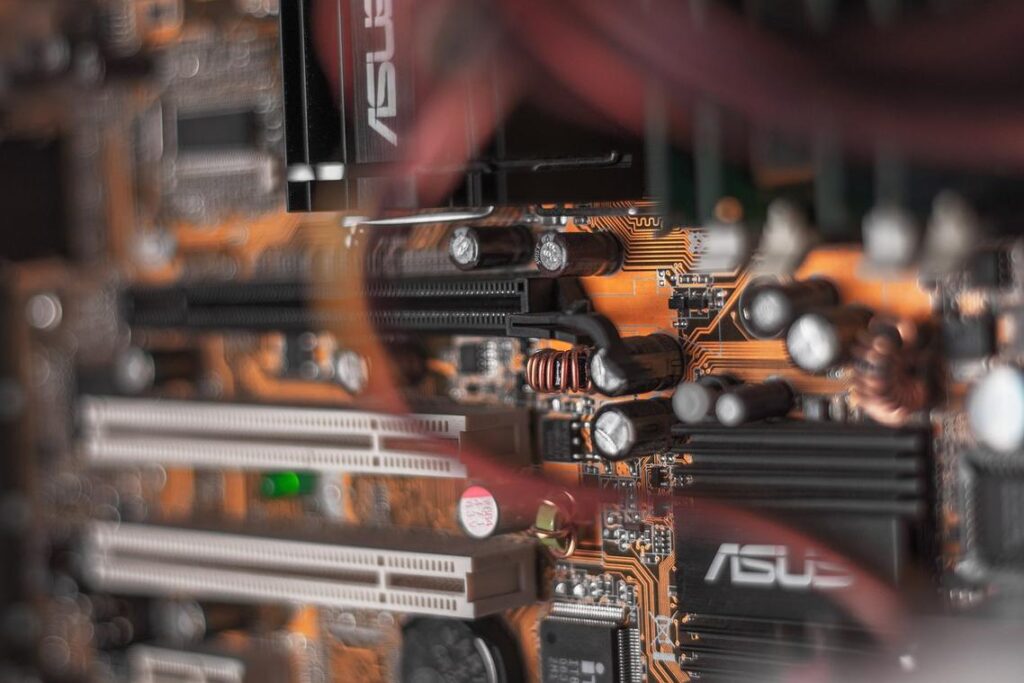
The race toward next-generation GPUs 2026 is accelerating, and if you’re searching for what’s actually coming next, you’re likely looking for more than hype. You want to understand performance leaps, architectural shifts, AI integration, power efficiency breakthroughs, and what these changes mean for your builds, infrastructure, or long-term tech strategy.
This article breaks down the most important developments shaping upcoming GPU releases—from emerging hardware trends and digital infrastructure demands to compatibility considerations and real-world deployment scenarios. Whether you’re upgrading a high-performance setup, planning enterprise-scale compute expansion, or tracking innovation signals, you’ll find clear, actionable insights here.
Our analysis draws from ongoing monitoring of hardware roadmaps, archived technical protocols, and verified industry reports to ensure accuracy and relevance. Instead of speculation, we focus on confirmed advancements, measurable trends, and practical implications—so you can make informed decisions about what’s worth waiting for and what’s ready now.
The Next Leap in Digital Reality
By 2026, GPUs won’t just be faster—they’ll be architecturally different. Today’s graphics cards rely on a single large chip. The shift ahead is toward multi-chip modules (separate processors working together like a coordinated team rather than a solo star). This design reduces bottlenecks, meaning fewer slowdowns when rendering complex game worlds or training AI models.
Another key change in next-generation GPUs 2026 is AI-native processing—hardware built specifically for machine learning tasks instead of adapting gaming cores for them. Think of it as moving from a multitool to specialized equipment.
• Expect breakthroughs in high-bandwidth memory, reducing data traffic jams significantly.
The End of Monolithic GPUs: The Rise of Chiplets and MCMs
For years, GPU makers chased performance by building bigger monolithic dies—one massive slab of silicon handling everything. However, physics and economics are pushing back. As dies grow, manufacturing yields (the percentage of usable chips per wafer) drop sharply because even tiny defects can ruin the entire chip. Add to that the reticle limit—the maximum area a lithography machine can expose in one pass—and you hit a hard ceiling. Bigger isn’t just expensive; it becomes impractical.
Enter Chiplets and Multi-Chip Modules
Instead of one giant die, Multi-Chip Modules (MCMs) combine several smaller dies inside a single package. Each “chiplet” is a specialized silicon block—compute, cache, or I/O—interconnected at high speed. Think of it like assembling a high-performance team instead of hiring one overworked superstar (the Avengers model beats the lone hero).
The benefits are immediate. Smaller dies improve yields, lowering manufacturing costs. Scalability becomes easier: vendors can mix and match chiplets to target gaming, AI, or workstation markets without redesigning everything. Performance also scales higher because multiple compute dies can work in parallel.
By 2026, next-generation GPUs 2026 will likely feature dedicated chiplets for ray tracing, AI acceleration, and video encoding. In other words, no more one-size-fits-all silicon—just purpose-built power tailored to your workload.
AI-Native Processing: How GPUs Are Becoming True Neural Engines
Today’s GPUs already flex serious AI muscle. Tensor Cores (specialized processing units designed for matrix math used in neural networks) power features like DLSS, while AMD’s FSR leans more heavily on software-based upscaling. The result? Sharper frames and better performance. But here’s the catch: these systems still depend significantly on driver-level and cloud-trained models. They’re smart, yet not fully autonomous.
Enter 2026. The big shift is the integration of dedicated Neural Processing Units (NPUs)—chips purpose-built for AI inference—directly onto the GPU package. In next-generation GPUs 2026, these accelerators reduce latency, increase on-device learning capability, and minimize reliance on external compute resources. This is where graphics hardware becomes a true neural engine.
For gaming, the impact is massive. NPCs (non-playable characters) can evolve unscripted behaviors instead of repeating dialogue trees like a 2011 RPG side quest. Procedural generation becomes dynamic, creating worlds that adapt in real time. Physics simulations grow more realistic because AI models predict environmental interactions instead of brute-forcing calculations.
Creative workflows benefit just as dramatically. AI-assisted rendering learns stylistic preferences, intelligent editing tools suggest cuts instantly, and generative art runs locally with minimal lag. (Think less waiting, more creating.) Pro tip: Local AI acceleration also improves data privacy by keeping assets on-device.
As explored in wearable tech hardware innovations changing healthcare, hardware-level AI integration consistently drives real-world transformation.
Breaking the Bottleneck: Next-Generation VRAM and Interconnects
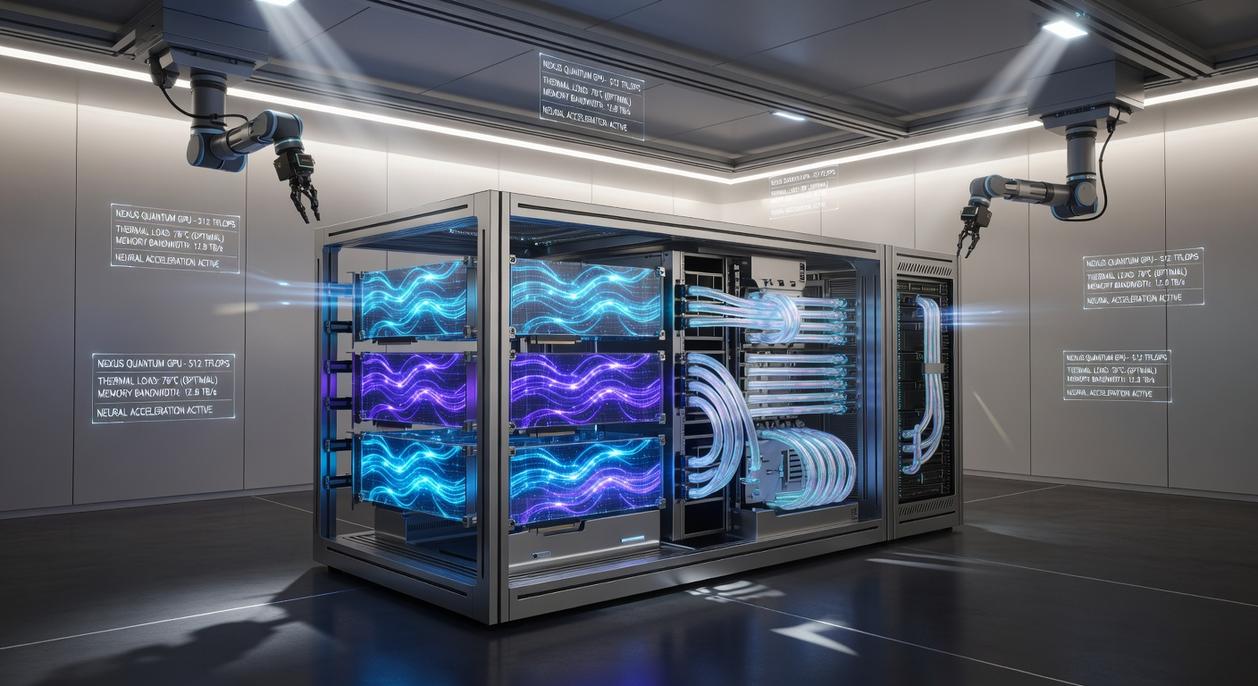
“Why does my 8K texture pack still stutter on a $2,000 GPU?” a developer asked during a recent hardware roundtable. The answer: MEMORY BANDWIDTH.
Texture sizes for 4K and 8K gaming have exploded, and modern AI models now demand tens of gigabytes of fast-access memory. VRAM (Video Random Access Memory, the GPU’s dedicated high-speed memory) is under siege. When it can’t feed data fast enough, you get texture pop-in, frame dips, and sluggish creative workflows.
Enter GDDR7. With projected speeds exceeding 32 Gbps—far beyond GDDR6 and 6X—it dramatically increases the rate at which data moves between memory and the GPU cores. “It’s not just faster,” one engineer noted, “it’s a wider highway.” That highway means higher-resolution assets load without choking the pipeline.
But memory alone isn’t enough. PCIe 6.0, the interface connecting GPU, CPU, and storage, doubles bandwidth again. Think of PCIe (Peripheral Component Interconnect Express) as the data freeway between components. With PCIe 6.0, massive game worlds and AI datasets stream faster from NVMe storage to GPU without bottlenecks.
The result for next-generation GPUs 2026? NO TEXTURE POP-IN. Near-instant environment loads. Seamless 8K video timelines that scrub like 1080p once did (finally).
As one tester put it: “It feels like the hardware stopped arguing with itself.”
More Power, Less Heat: Innovations in Efficiency and Thermal Management
High-end GPUs have trended toward higher wattage and hotter thermals, with flagship cards recently exceeding 450W under load (Tom’s Hardware, 2024). Critics argue that raw power is necessary for 4K gaming and AI workloads—and they’re right to a point. But escalating heat output creates diminishing returns, louder systems, and rising energy costs.
Advanced manufacturing nodes, particularly 3nm and below, are shifting the equation. According to TSMC, 3nm-class processes can deliver up to 30% power reduction at equivalent performance (TSMC N3 data brief). That means more performance-per-watt—essentially more output for every unit of electricity consumed.
Cooling is evolving just as quickly. Expect:
- Larger, full-coverage vapor chambers as standard
- Hybrid air/liquid cooling on flagship models
- Smarter fan curves tuned by onboard AI controllers
The result? next-generation GPUs 2026 should deliver elite performance in systems that are quieter, cooler, and far more energy-efficient (finally, your PC won’t double as a space heater).
Preparing Your Digital Setup for the 2026 Graphics Revolution
This isn’t another minor GPU bump. The convergence of chiplets, native AI accelerators, and next-gen memory like GDDR7 and HBM3e represents a PARADIGM SHIFT. If your current system struggles with 4K ray tracing or real-time 3D rendering, that ceiling is about to be shattered.
Why this matters: modern bottlenecks fall into three buckets—rendering throughput, AI compute, and data transfer. Chiplets increase parallel processing efficiency (multiple smaller dies working as one). Native AI cores handle tasks like frame generation and asset upscaling locally. Faster memory and wider buses eliminate data choke points. Together, they solve the traffic jam instead of just widening one lane.
Some argue incremental GPU upgrades are enough. But pairing next-generation GPUs 2026 with outdated PCIe 4.0 boards is like putting a jet engine on a bicycle (technically impressive, practically useless).
Future-proof checklist:
- Choose PCIe 6.0-ready motherboards
- Invest in ATX 3.0+ power supplies
- Ensure robust cooling for higher transient loads
PRO TIP: Plan your PSU wattage with 30% headroom to handle power spikes safely.
Stay Ahead of the Curve with Next-Generation GPU Insights
You came here to understand where graphics performance is heading and how the next-generation GPUs 2026 wave will impact your builds, workflows, and competitive edge. Now you have a clearer view of the architecture shifts, performance benchmarks, and infrastructure demands shaping the near future.
The reality is simple: falling behind on hardware trends means bottlenecks, compatibility issues, and missed opportunities. Whether you’re optimizing a high-performance setup, archiving evolving tech protocols, or planning your next upgrade cycle, staying proactive is no longer optional — it’s essential.
Here’s your next move: monitor innovation alerts, review compatibility with your current infrastructure, and start mapping upgrade paths now — not when supply tightens or standards shift. The platforms and professionals who stay informed early are the ones who scale smoothly.
If you want reliable updates, deep technical breakdowns, and step-by-step setup guidance trusted by serious tech enthusiasts, explore our latest alerts and infrastructure insights today. Don’t wait for performance gaps to slow you down — stay informed, stay optimized, and act now.
 Heathers Gillonuevo writes the kind of archived tech protocols content that people actually send to each other. Not because it's flashy or controversial, but because it's the sort of thing where you read it and immediately think of three people who need to see it. Heathers has a talent for identifying the questions that a lot of people have but haven't quite figured out how to articulate yet — and then answering them properly.
They covers a lot of ground: Archived Tech Protocols, Knowledge Vault, Emerging Hardware Trends, and plenty of adjacent territory that doesn't always get treated with the same seriousness. The consistency across all of it is a certain kind of respect for the reader. Heathers doesn't assume people are stupid, and they doesn't assume they know everything either. They writes for someone who is genuinely trying to figure something out — because that's usually who's actually reading. That assumption shapes everything from how they structures an explanation to how much background they includes before getting to the point.
Beyond the practical stuff, there's something in Heathers's writing that reflects a real investment in the subject — not performed enthusiasm, but the kind of sustained interest that produces insight over time. They has been paying attention to archived tech protocols long enough that they notices things a more casual observer would miss. That depth shows up in the work in ways that are hard to fake.
Heathers Gillonuevo writes the kind of archived tech protocols content that people actually send to each other. Not because it's flashy or controversial, but because it's the sort of thing where you read it and immediately think of three people who need to see it. Heathers has a talent for identifying the questions that a lot of people have but haven't quite figured out how to articulate yet — and then answering them properly.
They covers a lot of ground: Archived Tech Protocols, Knowledge Vault, Emerging Hardware Trends, and plenty of adjacent territory that doesn't always get treated with the same seriousness. The consistency across all of it is a certain kind of respect for the reader. Heathers doesn't assume people are stupid, and they doesn't assume they know everything either. They writes for someone who is genuinely trying to figure something out — because that's usually who's actually reading. That assumption shapes everything from how they structures an explanation to how much background they includes before getting to the point.
Beyond the practical stuff, there's something in Heathers's writing that reflects a real investment in the subject — not performed enthusiasm, but the kind of sustained interest that produces insight over time. They has been paying attention to archived tech protocols long enough that they notices things a more casual observer would miss. That depth shows up in the work in ways that are hard to fake.