

If you’re searching for clear, up-to-date insights on solid-state battery technology, you’re likely trying to understand what makes it different, why it matters, and how soon it could impact everything from electric vehicles to consumer electronics. With headlines promising faster charging, longer lifespans, and improved safety, it can be difficult to separate real breakthroughs from speculative hype.
This article is designed to cut through the noise. We examine how solid-state battery technology works, why it’s considered a major leap beyond traditional lithium-ion systems, and what current research and infrastructure developments reveal about its commercial readiness. Drawing on verified technical data, emerging hardware reports, and archived engineering protocols, we provide a grounded, evidence-based look at where the technology stands today.
By the end, you’ll have a practical understanding of its advantages, limitations, and what to realistically expect in the near future.
Lithium-ion batteries power our phones, cars, and consoles, yet engineers admit their limits: capped energy density, slow charging, and flammable liquid electrolytes. “We’re squeezing the last drops out of this chemistry,” one battery researcher told me. Meanwhile, demand for safer, longer-lasting power in EVs and portable hardware keeps accelerating. So what’s next? Enter solid-state battery technology, which replaces volatile liquids with solid electrolytes. “It’s not an upgrade; it’s an architectural reset,” argues a materials scientist. In other words, faster charging, higher capacity, and dramatically improved safety. Still, manufacturing hurdles and cost barriers delay mass adoption, raising critical questions about scale.
Deconstructing the Solid-State Architecture
A solid-state battery is, at its core, a battery that swaps out the flammable liquid inside traditional cells for a single solid material that conducts ions. In conventional designs, a porous separator and liquid or gel electrolyte shuttle charged particles between two electrodes. Think of that liquid like a wet sponge wedged between two walls—it works, but it can leak, degrade, or in rare cases ignite. A solid-state design replaces that sponge with a dense, non-flammable ceramic brick that still lets ions pass, just more safely (and, in my view, more elegantly).
The big idea behind solid-state battery technology is simplicity through solidity. Researchers are exploring three main electrolyte families: polymers (flexible and lightweight), sulfides (high conductivity but moisture-sensitive), and oxides or ceramics (stable but brittle). The material chosen ultimately shapes performance, safety, and cost.
Here’s where it gets interesting. I believe the real breakthrough isn’t just safety—it’s compatibility with lithium metal anodes. Ions move through the solid lattice via vacancies or interstitial sites, enabling higher energy density. That means lighter packs and longer runtimes (yes, your future console could thank this shift).
The Quantum Leap in Performance and Safety
When comparing today’s lithium-ion batteries to next-generation designs, the difference isn’t incremental — it’s transformative. Think of it as upgrading from a gas-powered sedan to a high-performance EV: same purpose, radically different capability.
First, consider energy density (the amount of energy stored per unit of weight or volume). Traditional lithium-ion cells are approaching their theoretical limits. In contrast, solid-state battery technology can increase energy density by 50–100% or more. In practical terms, that means two clear scenarios: smaller, lighter batteries delivering the same power, or devices and vehicles running dramatically longer without increasing size. For electric cars, that could mean hundreds of additional miles per charge.
Next comes safety — arguably the biggest leap forward. Conventional batteries rely on flammable liquid electrolytes, which can trigger thermal runaway (a chain reaction that leads to overheating, fires, or even explosions). Solid designs remove that volatile liquid entirely. As a result, the structural stability significantly reduces combustion risks. While critics argue modern lithium-ion packs already include safety management systems, eliminating the root cause is inherently more reliable than containing it.
Durability is another dividing line:
- Dendrite prevention — Solid structures block lithium crystal growth that can cause short circuits.
- Longer cycle life — More charge and discharge cycles, potentially thousands more.
- Structural resilience — Better tolerance to stress and temperature swings.
Finally, faster charging becomes realistic. Because the solid architecture handles higher current loads more efficiently, charging times could shrink from hours to minutes — a shift that would redefine user expectations (and patience levels).
Major Hurdles on the Path to Mass Production
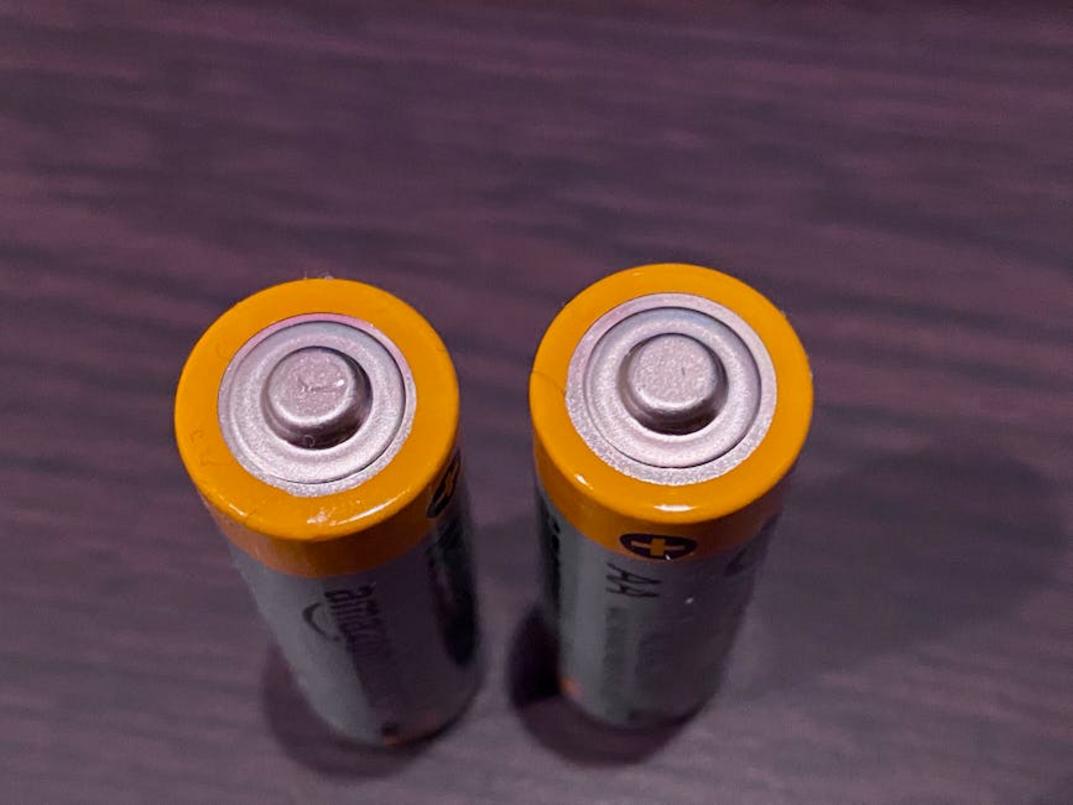
For all the excitement around solid-state battery technology, scaling it is less “flip the switch” and more “rebuild the factory.” Let’s break down why.
The Interface Challenge
First, there’s the interface problem. In simple terms, the interface is the physical boundary where the solid electrolyte touches the electrodes. Unlike liquid electrolytes that naturally seep into microscopic gaps, solids must maintain near-perfect surface contact. Even tiny imperfections create interfacial resistance—a barrier that slows ion flow and reduces performance. Think of it like two puzzle pieces that almost fit (almost doesn’t power your car). Some argue advanced coatings solve this, but real-world cycling stress still causes separation over time.
Manufacturing Complexity & Cost
Next, manufacturing. Producing these batteries often requires high-pressure compression, ultra-dry clean rooms, and entirely new fabrication lines. That means retrofitting gigafactories or building from scratch—both expensive. While skeptics claim costs will naturally fall with scale, current pilot lines show yields remain inconsistent, especially when stacking ultra-thin layers.
Pro tip: Watch capital expenditure reports from battery manufacturers—equipment investment often signals commercialization timelines before press releases do.
Material Stability: The Goldilocks Problem
The ideal electrolyte must conduct ions efficiently, block electrons, resist chemical reactions, and remain mechanically strong. That “Goldilocks” material is rare. Sulfides conduct well but can degrade; oxides are stable but brittle. No perfect candidate yet checks every box.
Dendrite Formation
Finally, dendrites—tiny lithium filaments—can still form under high current. In solids, they create micro-cracks that lead to short circuits. Reduced risk? Yes. Eliminated? Not yet.
Meanwhile, parallel hardware innovation—like in next generation gpus what to expect in 2026—shows how scaling breakthroughs demand ecosystem-wide shifts, not just better materials.
Emerging Applications and Hardware Impact
Electric Vehicles (EVs) remain the headline act. The ambition? A 10-minute charge and 500+ mile range, without fire-risk anxiety. That leap hinges on solid-state battery technology replacing liquid electrolytes with solid materials for higher energy density and stability. Skeptics argue fast charging will still strain grids—but pairing EV hubs with local storage could offset peaks (speculation).
Consumer Electronics could see phones lasting days and lighter laptops.
| Sector | Expected Impact |
|——–|—————–|
| Aerospace | Lighter, safer satellite power |
| Grid Storage | Smoother renewable integration |
Think “Iron Man” arc reactor energy—minus the sci-fi glow (for now).
The shift is no longer theoretical. Solid-state battery technology directly addresses the core bottlenecks of liquid electrolytes—namely flammability and energy limits. Energy density (the amount of power stored per unit volume) has reached 350–500 Wh/kg in lab settings, compared to ~250 Wh/kg for lithium-ion (Nature Energy, 2023). Moreover, removing liquid components dramatically reduces fire risk.
| Metric | Lithium-Ion | Solid-State |
|———|————-|————-|
| Energy Density | ~250 Wh/kg | 350–500 Wh/kg |
| Fire Risk | Moderate | Low |
| Cycle Life | 1,000–2,000 | 3,000+ |
Consequently, longer lifespan and improved safety make this transition inevitable as manufacturing scales.
Stay Ahead of the Next Hardware Shift
You came here to understand where modern tech infrastructure is heading — and now you have a clearer view of the innovation cycles shaping tomorrow’s systems. From evolving digital architecture to the rise of solid-state battery technology, the landscape is moving faster than ever.
The real challenge isn’t access to information. It’s knowing which signals matter before they become mainstream. Falling behind on emerging hardware trends or overlooked tech protocols can mean costly upgrades, missed performance gains, or outdated setups.
Stay proactive. Monitor innovation alerts consistently. Revisit archived tech protocols when planning upgrades. Apply structured setup tutorials to future-proof your systems before problems surface.
Thousands of forward-thinking tech enthusiasts rely on our insights to stay ahead of infrastructure shifts and hardware breakthroughs. Don’t wait until change forces your hand — explore the latest alerts now and position your setup for what’s next.
 There is a specific skill involved in explaining something clearly — one that is completely separate from actually knowing the subject. Jelvith Rothwyn has both. They has spent years working with digital infrastructure insights in a hands-on capacity, and an equal amount of time figuring out how to translate that experience into writing that people with different backgrounds can actually absorb and use.
Jelvith tends to approach complex subjects — Digital Infrastructure Insights, Tech Setup Tutorials, Knowledge Vault being good examples — by starting with what the reader already knows, then building outward from there rather than dropping them in the deep end. It sounds like a small thing. In practice it makes a significant difference in whether someone finishes the article or abandons it halfway through. They is also good at knowing when to stop — a surprisingly underrated skill. Some writers bury useful information under so many caveats and qualifications that the point disappears. Jelvith knows where the point is and gets there without too many detours.
The practical effect of all this is that people who read Jelvith's work tend to come away actually capable of doing something with it. Not just vaguely informed — actually capable. For a writer working in digital infrastructure insights, that is probably the best possible outcome, and it's the standard Jelvith holds they's own work to.
There is a specific skill involved in explaining something clearly — one that is completely separate from actually knowing the subject. Jelvith Rothwyn has both. They has spent years working with digital infrastructure insights in a hands-on capacity, and an equal amount of time figuring out how to translate that experience into writing that people with different backgrounds can actually absorb and use.
Jelvith tends to approach complex subjects — Digital Infrastructure Insights, Tech Setup Tutorials, Knowledge Vault being good examples — by starting with what the reader already knows, then building outward from there rather than dropping them in the deep end. It sounds like a small thing. In practice it makes a significant difference in whether someone finishes the article or abandons it halfway through. They is also good at knowing when to stop — a surprisingly underrated skill. Some writers bury useful information under so many caveats and qualifications that the point disappears. Jelvith knows where the point is and gets there without too many detours.
The practical effect of all this is that people who read Jelvith's work tend to come away actually capable of doing something with it. Not just vaguely informed — actually capable. For a writer working in digital infrastructure insights, that is probably the best possible outcome, and it's the standard Jelvith holds they's own work to.