
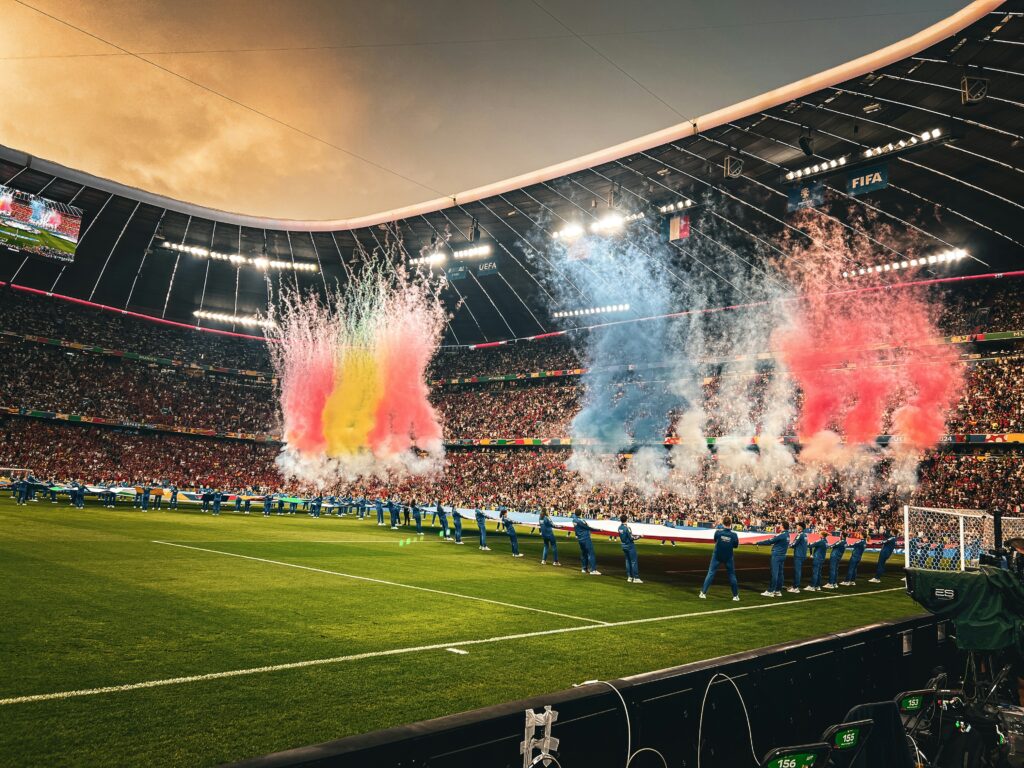
The FIFA World Cup has always been one of the most commercially powerful sporting events in the world, but the 2026 tournament is expected to break records across advertising, social media engagement, streaming audiences, and consumer spending. Hosted jointly by the United States, Canada, and Mexico, the competition will expand from 32 to 48 national teams for the first time in history, increasing the number of matches from 64 to 104.
This larger tournament format is expected to dramatically increase fan engagement opportunities for global brands. FIFA reported that the 2022 World Cup in Qatar reached approximately 5 billion people worldwide across television, digital platforms, and social media, while the final between Argentina and France alone attracted roughly 1.5 billion viewers globally.
With North America hosting the next edition and digital consumption habits evolving rapidly, companies are preparing for one of the largest global marketing opportunities of the decade.
Football audiences now engage with tournaments very differently than they did even eight years ago. Fans simultaneously watch matches, scroll social media, interact with live content creators and check World Cup odds on DraftKings while discussing games online in real time.
The 2026 World Cup Will Deliver Record Audience Numbers
The expanded tournament structure alone guarantees more content, more broadcasts, and more opportunities for advertisers.
The jump from 64 matches in 2022 to 104 matches in 2026 represents a 62.5% increase in total games played. More matches mean:
- More advertising inventory
- More streaming hours
- More sponsorship exposure
- More social media engagement
- More regional audience participation
The addition of 16 extra national teams also increases representation from Africa, Asia, North America, and the Middle East, helping FIFA tap into rapidly growing football audiences.
According to Statista, the global sports media rights market exceeded $60 billion in 2024, with football accounting for one of the largest portions of that revenue.
Industry analysts expect World Cup 2026 to become the most commercially valuable football tournament ever staged because of:
- Expanded format
- North American advertising power
- Larger digital audiences
- Increased streaming accessibility
Social Media Activity Will Reach New Highs
The 2022 World Cup demonstrated how dominant social media has become during major sporting events.
According to FIFA:
- The tournament generated billions of social media engagements globally
- FIFA’s own social channels recorded over 93 billion cumulative engagements during the competition
- TikTok, Instagram, and YouTube experienced enormous spikes in football-related content consumption
By 2026, short-form video is expected to dominate fan engagement even more heavily.
Platforms likely to benefit most include:
- TikTok
- Instagram Reels
- YouTube Shorts
- X
- Twitch
Younger audiences increasingly consume football through highlights, reactions, memes, and creator commentary rather than traditional television alone.
This changes how brands approach advertising. Instead of focusing only on expensive TV commercials, companies are now prioritizing:
- Influencer partnerships
- Viral video campaigns
- Interactive fan content
- Real-time social engagement
Brands Will Spend More on Influencer Marketing
Influencer marketing around football has exploded in recent years.
Football creators on YouTube and TikTok regularly generate millions of views discussing:
- Match predictions
- Tactical analysis
- Transfer rumors
- Player reactions
- Tournament simulations
According to Influencer Marketing Hub, the global influencer marketing industry reached approximately $24 billion in 2024.
World Cup 2026 is expected to become one of the largest influencer-driven sporting events ever.
Brands increasingly prefer influencer partnerships because:
- Engagement rates are often higher than traditional ads
- Content feels more authentic
- Campaigns can react quickly to live events
- Younger audiences trust creators more than corporate messaging
Expect companies to heavily partner with:
- Football influencers
- Former players
- Streamers
- Gaming creators
- Lifestyle personalities
Sports Betting Companies Will Increase Advertising
The growth of legalized sports betting in North America is expected to significantly impact World Cup advertising strategies.
Since the repeal of PASPA in the United States in 2018, sports betting has expanded rapidly across multiple states. According to the American Gaming Association, U.S. sports betting revenue reached approximately $13.7 billion in 2024.
The World Cup represents one of the largest betting opportunities globally because football attracts massive international wagering activity.
Betting companies are expected to invest heavily in:
- Broadcast sponsorships
- Social media campaigns
- Live odds integrations
- Mobile app advertising
- Influencer partnerships
At the same time, regulators are likely to monitor gambling-related advertising more closely due to concerns surrounding responsible gambling messaging.
Streaming Platforms Are Competing Aggressively
Streaming consumption continues reshaping sports broadcasting worldwide.
Research from Deloitte found that younger sports fans increasingly prefer:
- Mobile streaming
- Multi-screen viewing
- Interactive broadcasts
- Personalized content feeds
World Cup 2026 broadcasters are expected to heavily invest in:
- AI-generated highlights
- Alternate commentary streams
- Real-time statistics
- Interactive viewing experiences
- Personalized notifications
Streaming services understand that football audiences generate enormous advertising value because of their high engagement levels during live events.
AI and Consumer Data Will Shape Marketing Campaigns
Artificial intelligence is expected to play a major role in World Cup advertising and fan engagement.
Brands now use AI tools to:
- Analyze fan behavior
- Predict engagement trends
- Deliver targeted advertising
- Monitor viral moments
- Personalize recommendations
Real-time marketing has become increasingly important during live sporting events. For example:
- A viral player celebration may immediately appear in branded campaigns
- Trending football moments can trigger automated advertising placement
- AI systems can optimize social media timing during live matches
This level of data-driven advertising was far less advanced during previous World Cups.
Gaming and Football Culture Continue to Merge
Gaming companies are also expected to play a major role in World Cup marketing activity.
EA Sports FC and football esports ecosystems continue attracting younger football audiences globally. According to Newzoo, the global gaming market generated over $184 billion in revenue during 2024.
Football gaming communities overlap heavily with:
- Streaming audiences
- Fantasy sports users
- Sports betting consumers
- Social media football fans
As a result, expect brands when it comes to their broader World Cup marketing strategies to increasingly combine:
- Gaming campaigns
- Esports tournaments
- Interactive prediction games
- Digital collectibles
- Virtual fan experiences
North America’s Commercial Power Will Drive Growth
The decision to host the tournament across the United States, Canada, and Mexico dramatically increases commercial potential.
The United States alone is the world’s largest advertising market, while Mexico brings one of the most passionate football fan bases globally.
Combined, the three host nations create:
- Massive sponsorship opportunities
- Expanded tourism revenue
- Strong media rights value
- Huge digital engagement potential
Industry analysts expect the 2026 FIFA World Cup to become the highest-revenue tournament in FIFA history.
The FIFA World Cup has evolved into much more than a football tournament. It is now one of the largest digital media events in the world, influencing advertising, streaming, social media, gaming, betting, and global consumer behavior simultaneously.
As World Cup 2026 approaches, brands are preparing for record-breaking levels of audience engagement driven by mobile consumption, influencer marketing, AI-powered advertising, and streaming innovation.
With more teams, more matches, and more digital connectivity than ever before, the 2026 tournament may completely redefine how companies approach global sports marketing in the modern era.
 Geoffrey Southernovalen is the kind of writer who genuinely cannot publish something without checking it twice. Maybe three times. They came to tech setup tutorials through years of hands-on work rather than theory, which means the things they writes about — Tech Setup Tutorials, Innovation Alerts, Digital Infrastructure Insights, among other areas — are things they has actually tested, questioned, and revised opinions on more than once.
That shows in the work. Geoffrey's pieces tend to go a level deeper than most. Not in a way that becomes unreadable, but in a way that makes you realize you'd been missing something important. They has a habit of finding the detail that everybody else glosses over and making it the center of the story — which sounds simple, but takes a rare combination of curiosity and patience to pull off consistently. The writing never feels rushed. It feels like someone who sat with the subject long enough to actually understand it.
Outside of specific topics, what Geoffrey cares about most is whether the reader walks away with something useful. Not impressed. Not entertained. Useful. That's a harder bar to clear than it sounds, and they clears it more often than not — which is why readers tend to remember Geoffrey's articles long after they've forgotten the headline.
Geoffrey Southernovalen is the kind of writer who genuinely cannot publish something without checking it twice. Maybe three times. They came to tech setup tutorials through years of hands-on work rather than theory, which means the things they writes about — Tech Setup Tutorials, Innovation Alerts, Digital Infrastructure Insights, among other areas — are things they has actually tested, questioned, and revised opinions on more than once.
That shows in the work. Geoffrey's pieces tend to go a level deeper than most. Not in a way that becomes unreadable, but in a way that makes you realize you'd been missing something important. They has a habit of finding the detail that everybody else glosses over and making it the center of the story — which sounds simple, but takes a rare combination of curiosity and patience to pull off consistently. The writing never feels rushed. It feels like someone who sat with the subject long enough to actually understand it.
Outside of specific topics, what Geoffrey cares about most is whether the reader walks away with something useful. Not impressed. Not entertained. Useful. That's a harder bar to clear than it sounds, and they clears it more often than not — which is why readers tend to remember Geoffrey's articles long after they've forgotten the headline.