

Staying ahead in today’s fast-moving tech landscape means understanding where innovation is actually headed—not where the hype suggests it’s going. If you’re searching for clarity on next-generation wearables, you’re likely trying to separate breakthrough advancements from incremental upgrades and understand what truly matters for performance, connectivity, and long-term usability.
This article delivers a focused look at the newest developments shaping wearable technology, from advanced sensors and edge processing to evolving digital infrastructure that supports seamless integration. We analyze emerging hardware trends, archived tech protocols that still influence modern builds, and practical setup considerations that impact real-world performance.
Our insights are grounded in continuous monitoring of innovation alerts, technical documentation, and infrastructure shifts across the tech ecosystem. By combining trend analysis with hands-on technical evaluation, we provide a clear, trustworthy breakdown of where wearable technology is heading—and what it means for users, developers, and early adopters alike.
Beyond basic step counts, state-of-the-art wearables now function as clinical-grade sensors and digital hubs. By clinical-grade, we mean devices validated against medical standards, not gym gadgets. For example, the latest watches track ECG (electrocardiogram, a heart rhythm test) and SpO2, once limited to hospitals.
So what separates innovation from hype? “If it can’t produce actionable data, it’s a wrist toy,” one biomedical engineer told me. Meanwhile, skeptics argue most users don’t need that depth. Fair point. However, as next-generation wearables integrate AI-driven analytics and alerts, the value shifts from tracking to predicting. In other words, prevention beats counting steps today.
The On-Body Clinic: Advanced Health and Biosensing Capabilities
As the landscape of next-generation wearable devices and smart sensors evolves, they increasingly rely on the power and efficiency of ARM-based processors, which are reshaping the way we think about computing and connectivity in our daily lives – for more details, check out our How ARM-Based Processors Are Changing Computing.
Wearables have quietly evolved from step counters into something far more powerful: an on-demand health checkpoint you strap to your wrist (or slip onto your finger). The real benefit? Earlier insights, fewer surprises, and more control over your long-term health.
ECG and Afib Detection
An electrocardiogram (ECG) measures the heart’s electrical activity. Devices like the Apple Watch Series 9 and Google Pixel Watch 2 let you take an on-demand ECG by placing a finger on the crown, completing a circuit across your body. Within 30 seconds, you can screen for atrial fibrillation (Afib), an irregular rhythm linked to stroke risk (CDC). Some critics argue wrist-based ECGs can’t replace clinical tests—and that’s true. However, they excel at catching intermittent issues between doctor visits, giving you documentation to share with your physician.
Blood Oxygen (SpO2) and Sleep Apnea Indicators
SpO2 sensors estimate how much oxygen your blood carries. Low overnight levels may signal respiratory problems or sleep apnea. Devices like the Fitbit Sense 2 and Withings ScanWatch track trends, helping you identify patterns before fatigue becomes your “normal.” While not diagnostic tools (yet), they prompt timely medical conversations—often the difference between guessing and knowing.
Continuous Glucose Monitoring (CGM) Integration
Here’s where next-generation wearables truly shine. By syncing with CGM patches like Dexcom, users see real-time glucose data without finger pricks. For diabetics, that means tighter control and fewer dangerous spikes. For biohackers, it reveals how specific foods affect energy (spoiler: that “healthy” smoothie might spike you).
Skin Temperature and Cycle Tracking
Finally, skin temperature sensors—like those in the Oura Ring Gen3—track subtle nightly shifts. These fluctuations can indicate illness onset, recovery status, or menstrual cycle phases. The payoff? More precise sleep insights, smarter training decisions, and better reproductive health awareness, all from passive data you’re already generating.
Seamless Integration: The Wearable as Your Personal AI Assistant
Wearables have quietly evolved from step counters into on-device AI hubs. Thanks to dedicated neural processors (chips built specifically to handle artificial intelligence tasks), modern devices process voice commands and predictive suggestions locally—no phone required. That means faster responses and better privacy because your data doesn’t always travel to the cloud (a growing concern, as 81% of Americans report feeling little control over their data, per Pew Research Center).
Practical tip: Turn on offline voice processing in your device settings. You’ll notice quicker replies when setting reminders or sending texts—especially in low-signal areas.
Some argue cloud AI is still smarter due to larger data models. Fair point. But for everyday tasks—timers, navigation, quick replies—local AI is faster and more secure (and you’re not stuck waiting for a signal in a parking garage).
Ecosystem Control From Your Wrist
Your wearable is now a command center. Adjust smart lights, lock doors, or change music without reaching for your phone.
Try this:
- Link your wearable to your smart home app.
- Create a “Good Night” routine.
- Trigger it from your wrist.
It feels a bit sci-fi—very Tony Stark minus the flying suit.
Advanced Connectivity
Ultra-Wideband (UWB)—a short-range wireless protocol—enables pinpoint location tracking. Use it to find your car in a packed lot. Standalone cellular models also let you stream music or take calls phone-free.
Contactless Payments and Digital Keys
With NFC (Near Field Communication), tap to pay securely. Many car brands and hotels now support digital keys.
Pro tip: Enable biometric authentication for payments. It adds a layer of protection without slowing you down.
This is where next-generation wearables stop being accessories—and start becoming infrastructure.
For the Elite Performer: Niche Devices with Hyper-Specialized Features
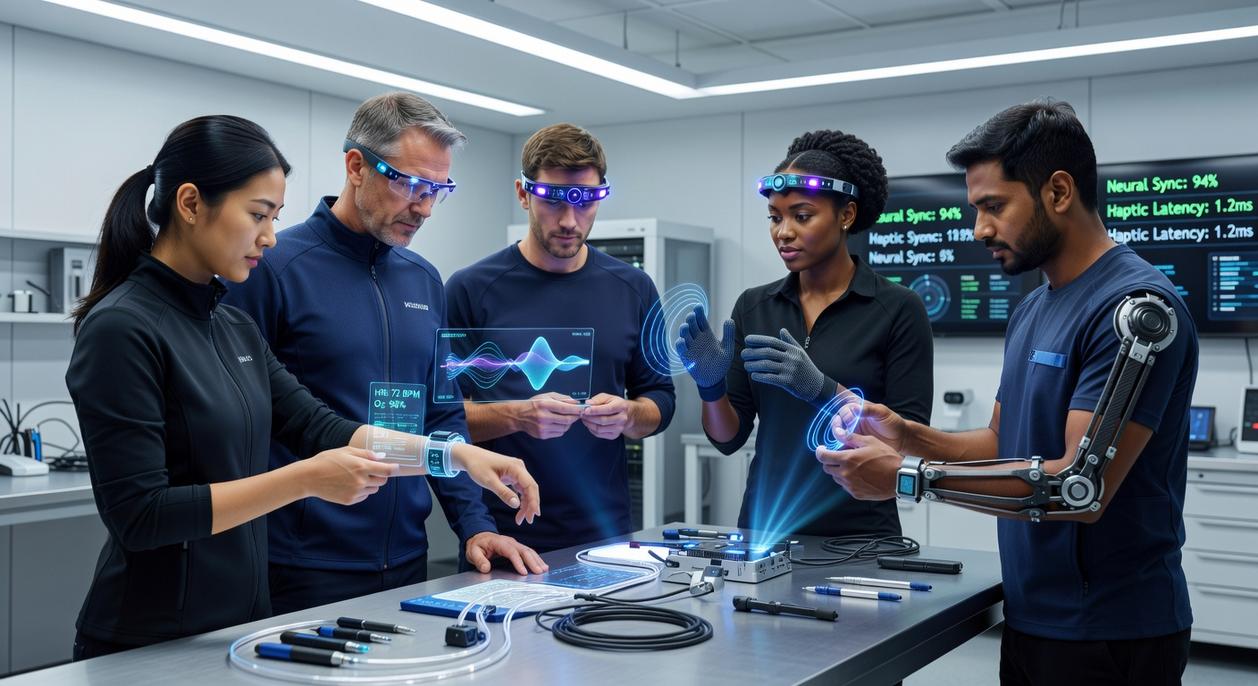
Elite athletes don’t just want data; they want precision. That’s where multi-band GNSS (Global Navigation Satellite System, meaning devices that connect to multiple satellite frequencies instead of one) changes the game. In dense cities or deep forests, standard GPS can drift by several meters. Multi-band GNSS, featured in devices like the Garmin Fenix 7 Pro, reduces signal bounce and improves positional accuracy (Garmin reports significantly improved tracking in challenging terrain). In other words: marathoner in Manhattan vs. marathoner in open plains? The former benefits far more from multi-band support.
Now compare that with dive functionality. A traditional fitness watch tracks laps in a pool. The Apple Watch Ultra 2, however, doubles as a recreational dive computer—monitoring depth, bottom time, and safety stops in line with EN13319 certification standards. Casual swimmer vs. certified diver? Completely different needs.
Then there’s power and durability. Solar charging extends battery life dramatically in optimal sunlight, while MIL-STD-810G ratings certify resistance to shock, heat, and vibration (U.S. Department of Defense standard). Weekend hiker vs. multi-day expedition climber? Solar and ruggedization suddenly matter.
Some argue smartphones can replicate most features. Fair—but next-generation wearables integrate sensors, battery efficiency (see how arm based processors are changing computing), and rugged builds into one wrist-bound command center. Pro tip: match the device to your harshest environment, not your average day.
The Next Frontier: Emerging Form Factors and Capabilities
Smart rings are redefining minimalism. Devices like the Ultrahuman Ring Air deliver continuous heart rate, HRV, sleep staging, and temperature tracking in a screenless band weighing under 3 grams. Counterargument: skeptics say smaller devices mean compromised accuracy. Yet independent validation studies comparing ring-based sensors to ECG chest straps show heart-rate accuracy above 95% during rest (JMIR, 2022).
AR glasses and AI-powered earbuds push next-generation wearables toward ambient computing. IDC projects global AR device shipments to grow over 30% annually through 2027. Explore more at industry research for deeper market forecasts today.
Choosing advanced wearables isn’t about chasing trends; it’s about upgrading your daily decisions. Now that you understand the tech, the real win is alignment. If you prioritize clinical-grade heart monitoring, you gain earlier health insights and smarter doctor conversations. Meanwhile, fitness-focused users unlock cleaner performance data and faster progress. Want seamless convenience? Ecosystem control turns your wrist into a command center. The benefit is simple: you invest in capability, not clutter. So, which outcome matters most to you? Evaluate needs, compare next-generation wearables, and choose a tool that compounds value daily. Over time, that clarity saves money and frustration significantly.
Stay Ahead of the Wearable Tech Curve
You set out to understand where wearable technology is heading and how to prepare for what’s next. Now you have a clearer view of the infrastructure shifts, hardware breakthroughs, and ecosystem changes driving next-generation wearables forward.
The reality is simple: falling behind on emerging tech trends means wasted investments, outdated setups, and missed competitive advantages. As devices evolve faster, your digital infrastructure and technical knowledge must evolve with them.
The smartest move now is to take action. Audit your current setup, monitor innovation alerts consistently, and align your systems with the hardware trends shaping tomorrow’s market. Staying proactive is the difference between reacting late and leading early.
If you’re serious about staying ahead, rely on a platform trusted by thousands of tech enthusiasts and professionals for accurate alerts, archived protocols, and step-by-step setup guidance. Don’t wait for disruption to catch you off guard—explore the latest updates now and future-proof your tech today.
 Geoffrey Southernovalen is the kind of writer who genuinely cannot publish something without checking it twice. Maybe three times. They came to tech setup tutorials through years of hands-on work rather than theory, which means the things they writes about — Tech Setup Tutorials, Innovation Alerts, Digital Infrastructure Insights, among other areas — are things they has actually tested, questioned, and revised opinions on more than once.
That shows in the work. Geoffrey's pieces tend to go a level deeper than most. Not in a way that becomes unreadable, but in a way that makes you realize you'd been missing something important. They has a habit of finding the detail that everybody else glosses over and making it the center of the story — which sounds simple, but takes a rare combination of curiosity and patience to pull off consistently. The writing never feels rushed. It feels like someone who sat with the subject long enough to actually understand it.
Outside of specific topics, what Geoffrey cares about most is whether the reader walks away with something useful. Not impressed. Not entertained. Useful. That's a harder bar to clear than it sounds, and they clears it more often than not — which is why readers tend to remember Geoffrey's articles long after they've forgotten the headline.
Geoffrey Southernovalen is the kind of writer who genuinely cannot publish something without checking it twice. Maybe three times. They came to tech setup tutorials through years of hands-on work rather than theory, which means the things they writes about — Tech Setup Tutorials, Innovation Alerts, Digital Infrastructure Insights, among other areas — are things they has actually tested, questioned, and revised opinions on more than once.
That shows in the work. Geoffrey's pieces tend to go a level deeper than most. Not in a way that becomes unreadable, but in a way that makes you realize you'd been missing something important. They has a habit of finding the detail that everybody else glosses over and making it the center of the story — which sounds simple, but takes a rare combination of curiosity and patience to pull off consistently. The writing never feels rushed. It feels like someone who sat with the subject long enough to actually understand it.
Outside of specific topics, what Geoffrey cares about most is whether the reader walks away with something useful. Not impressed. Not entertained. Useful. That's a harder bar to clear than it sounds, and they clears it more often than not — which is why readers tend to remember Geoffrey's articles long after they've forgotten the headline.